Gambling Debt: The First Five Steps (Before You Borrow Another Dollar)
You just lost big and you're about to borrow more. Here's the exact order: block access, list every debt, then get free help, before you do anything else.
By Bastien, Cashout founder · Last edited
September 18, 2026: corrected minimum-payment and settlement-fee statements using CFPB guidance. This guide does not assess an individual debt situation.

The short answer
Reduce access to further gambling while protecting essential expenses. List your debts, required payments and due dates, then seek qualified debt help. A token payment below the minimum does not keep an account current. Ask creditors about hardship options and compare nonprofit counseling services and fees.
Start here, before you pay anything: stop the bleeding
If you’re having thoughts of harming yourself, stop reading and call or text 988 (US, free, 24/7) right now. If the urge to gamble is the crisis, call or text 1-800-MY-RESET, the national problem gambling helpline (the number formerly known as 1-800-GAMBLER), also free and staffed 24/7 (NCPG). You can also find crisis resources any time at /help/. None of what follows matters more than that.
Now, the actual first step, and it isn’t a spreadsheet. It’s blocking your own access to gambling before you touch a single dollar of the debt.
Here’s why order matters. You cannot out-earn a leak. If you spend the next month scraping together payments while your sportsbook app is still one tap away, you’re not paying off debt, you’re refilling a bucket with a hole in the bottom. Every dollar you send to a creditor is a dollar that’s still reachable by the next bad night. The people who dig out fastest aren’t the ones with the best budget, they’re the ones who removed the option to make it worse first.
Concretely, before step one of the debt work:
- Self-exclude from every platform you use. Most US states run gambling self-exclusion programs, and every major sportsbook and casino app has its own exclusion tool. Our self-exclusion guide walks through the state programs and the app-by-app process.
- Block gambling transactions at the bank level. Several major US banks let you block gambling merchant codes on your card directly, which stops the deposit even if you relapse and open an app. Here’s how to block gambling transactions at your bank.
- Install a blocker on your phone for the sites and apps self-exclusion doesn’t fully cover. We compared the real options, free and paid, honestly, in our gambling blocker apps guide.
Do these three things this week, ideally today. Then move to the debt itself. If you want the full sequence, from the first 48 hours to the first sober month, the pillar guide on how to quit gambling covers the whole arc; this piece is just the money part.
Step 1: Write down every dollar, no rounding down
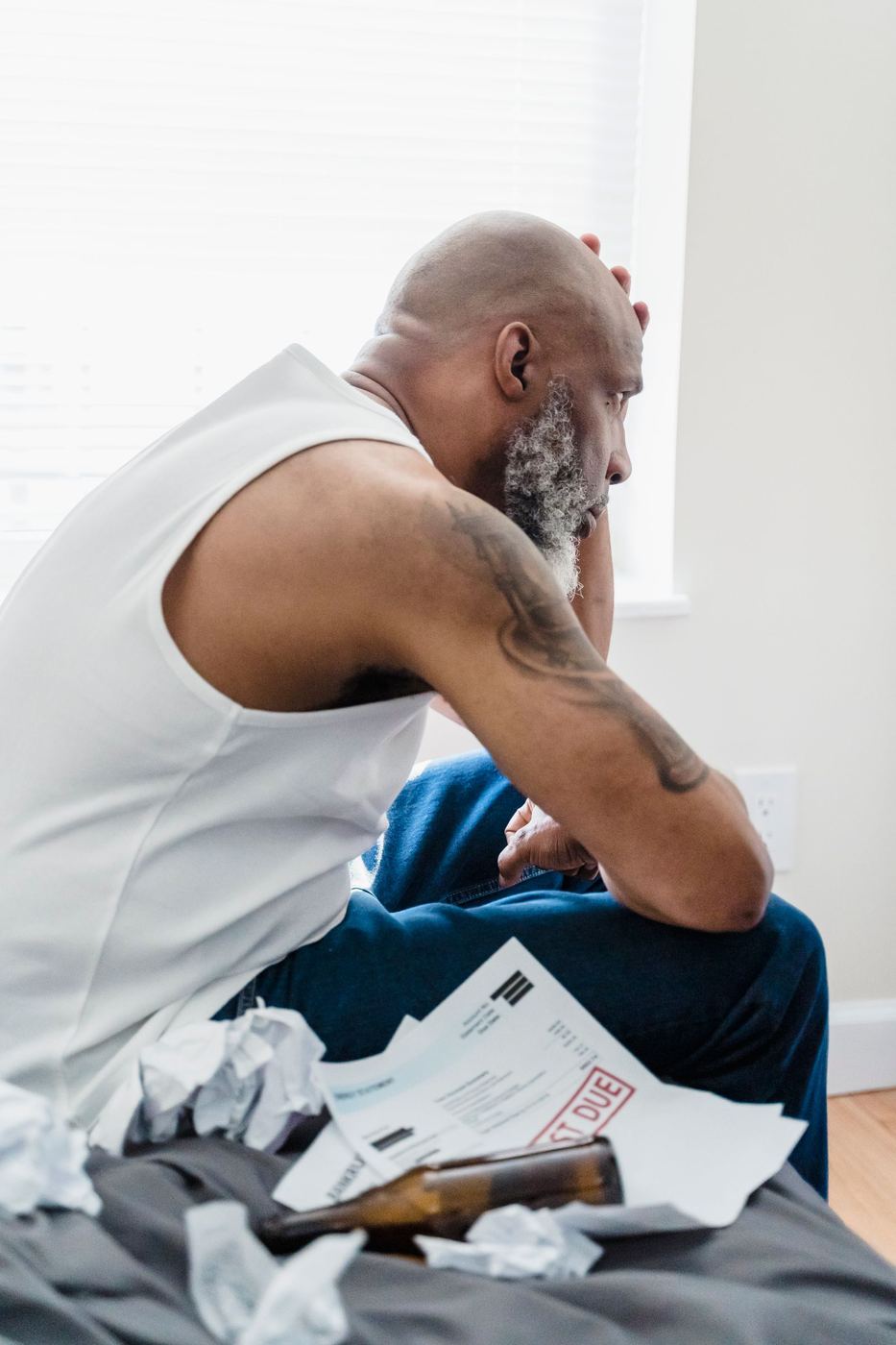
Most people who come out of a bad gambling stretch know their debt is bad. Almost none of them know the actual number. Not because they’re careless, because the brain that got you into a six-figure loss chasing a bet is the same brain that flinches away from adding it all up. Avoidance is the symptom, not a character flaw. Knowing the real total is what makes it solvable instead of infinite and terrifying.
Make a literal list. One page, every source:
- Credit cards, balance and APR for each
- Personal loans and lines of credit
- Buy-now-pay-later balances
- Sportsbook or casino site credit, if you used any
- Cash advances and payday loans
- Money borrowed from friends or family, even the “no rush” loans
- Overdrafts and negative account balances
- Anything owed to a bookie or informal lender outside the regulated system
Add it up. Write the total at the top of the page. This number is going to feel enormous the first time you see it in one place. That’s normal, and it’s also the last time it will feel unmanageable, because from here it’s a list of specific, solvable line items instead of a vague dread.
If you can’t face doing this alone, a free NFCC credit counselor will do this exercise with you on the phone, and Gamblers Anonymous pressure relief meetings exist specifically for this step (more on both below).
Step 2: Triage, essentials first, worst-APR debt next
Not all debt is equally urgent. Before you decide how to attack the total, sort it into three buckets.
Bucket one: keep the lights on. Rent or mortgage, utilities, groceries, insurance, transportation to work. These come before any debt payment, always. A missed credit card payment is a problem. A missed rent payment is a crisis. If money is genuinely tight, essentials get funded first and every creditor gets a call explaining the situation, not silence.
Bucket two: check required payments and due dates. A token payment below the required minimum does not keep an account current. The CFPB explains that paying less than the minimum can still lead to a late fee. If the minimum is unaffordable, contact the creditor about hardship options and ask a credit counselor to help prioritize debts (CFPB: minimum payments).
Bucket three: identify the debt that’s actively getting worse. Payday loans, cash advances, and anything with an APR north of 25 to 30 percent belong here. This is the debt that compounds fastest and does the most damage if left alone, and it’s usually the first target once essentials and minimums are covered.
Sportsbook and casino credit, if you have any, deserves a special note: some operators apply aggressive collection tactics quickly. Treat it with the same urgency as high-APR debt, and don’t assume it’s less “real” than a bank loan just because it came from gambling.
Step 3: Get free professional help before you pay anyone a settlement fee
This is the step most people skip, either because they think they have to solve it alone, or because they get pulled toward a for-profit debt settlement company that promises a fast fix.
Nonprofit credit counseling, through the NFCC, is free or low-cost, and it’s the right first call. A certified counselor will look at your full financial picture, not just the gambling debt, and can often set up a debt management plan (DMP) that consolidates unsecured debt into a single monthly payment at a reduced interest rate, negotiated directly with your creditors (NFCC on debt management plans). This isn’t a loan, and it isn’t a company taking a percentage of what you save. Find an accredited agency at nfcc.org.
A Gamblers Anonymous pressure relief group meeting is the other free option, and it’s specific to gambling debt in a way general credit counseling isn’t. In a pressure relief meeting, experienced GA members sit down with you and help build a realistic budget and repayment plan based on your actual income, factoring in that some creditors will need to be told directly that you’re recovering from a gambling problem, which changes how the conversation goes. Details on how it works are in the Pressure Relief Group Meeting handbook.
Now the warning, said plainly. For-profit debt settlement companies are a different thing from nonprofit credit counseling, and the industry has a real trust problem. Their typical model tells you to stop paying your creditors entirely and instead save money into a separate account, while they negotiate a lump-sum settlement. In the meantime, your accounts go delinquent, late fees and interest pile up, your credit score takes a harder hit than it would have otherwise, and the collections calls you were trying to escape often get worse before they get better. Fees and legal restrictions depend on the arrangement; do not accept a claim that a provider may charge regardless of results. The CFPB explains the conditions that must be met before covered settlement fees can be collected. If a settlement firm calls you first, or you see one advertised as a fast fix, read the CFPB’s debt collection resources before you sign anything, and compare it against a free NFCC consultation first. Ask for fees in writing: nonprofit status does not mean every service is free.
Step 4: Build a payback plan you can actually survive
Once you know the total and you’ve talked to a counselor or a pressure relief group, you need an actual timeline. A few honest things about this step:
It will probably take longer than you want. If the debt took months or years to build, it isn’t coming out in six weeks. A realistic plan, one you can sustain without white-knuckling every payment, beats an aggressive plan you abandon in month three.
Pick a payoff order and stick to it. Two common methods: the avalanche method pays the highest-APR debt first, which saves the most money in interest over time. The snowball method pays the smallest balance first, which builds momentum and a string of early wins. Neither is objectively wrong. If you’re the type of person who needs early proof this is working, snowball. If you trust the math and want to minimize what you pay total, avalanche. A credit counselor can run both scenarios with your actual numbers.
Watch for windfall thinking, this is the trap that restarts everything. “One good bet and I clear the whole thing” is the exact thought pattern that created the debt in the first place, and it’s seductive precisely because the number now feels too big for slow, boring monthly payments to fix. It isn’t. A structured plan, paid down steadily, is the only version of this that has ever actually worked for anyone. There is no bet-sized shortcut out of gambling debt; the only way out that doesn’t risk making it worse is the plan, not the wager.
This is also where a simple visual can help more than it sounds like it should. Watching a number tick up as you pay debt down, or watching what a month of gambling actually cost you laid out in dollars, does something a mental estimate doesn’t. It’s part of why we built Cashout’s money-saved counter to run in reverse from the day you stop, so instead of watching losses disappear into an app, you watch the hole get smaller with a real number attached to it. Cashout is still pre-launch, you can join the waitlist here, but you don’t need our app to do this step: our free gambling cost calculator will show you exactly what a month, a year, or five years of your current pattern costs, no signup required.
Step 5: Protect the recovery so the debt doesn’t come back
Paying off the debt and staying out of new debt are two different problems, and the second one is where a lot of people slip.
Hand over visibility, temporarily, to someone you trust. This doesn’t mean giving up your accounts. It means agreeing that a partner, sibling, or close friend can see your bank and card statements for a set period, say, 90 days, so there’s a second set of eyes on the money while your own judgment is rebuilding trust with itself. Most people find this less humiliating than they expect and more relieving than they expect.
Automate what you can. Auto-pay for minimums, automatic transfers to the debt payoff fund on payday, before the money is in an account you can move it out of on impulse. The less this depends on daily willpower, the more likely it survives a bad week.
Watch for the “I deserve it” window. It usually shows up a few weeks to a few months into recovery, once the crisis feeling has faded and the debt feels more like background noise than an emergency. That’s exactly when a single bet feels almost harmless, “just this once, I’ve been so disciplined.” This is the same trap as windfall thinking, wearing a different outfit. The blockers and self-exclusion you set up in step 0 matter most in this exact window, because motivation is lowest right when the danger is highest.
Telling your partner or family: a script, not a confession
If you share finances, or the debt is large enough to affect someone else’s life, this conversation is coming eventually, and it usually goes better sooner and on your terms than later when they find out from a bank statement or a collector’s call.
You don’t need a perfect speech. Something close to this works:
“I need to tell you something hard. I’ve built up gambling debt, the total is [the actual number]. I’m not telling you to ask for money right now, I’m telling you because I’ve already started fixing it. I’ve blocked myself from every gambling app and site, I’ve written down the full number, and I’m getting free help from [NFCC / a GA pressure relief group] to build a real payoff plan. I want you to know because hiding it is part of what let it get this big, and I don’t want to do that anymore.”
Say the real number. A softened number that gets corrected later costs more trust than a hard number said once, clearly. And say what you’ve already done before you ask for anything, action first, ask second, because it changes the conversation from “can you bail me out” to “here’s where I actually stand.”
The debt is a number. It is not a verdict on who you are. Every step above is something people have actually done, in this order, and come out the other side solvent. Start with step 0, today, before you read anything else about the plan.
Frequently asked questions
Should I take out a consolidation loan to pay off gambling debt?
Will gambling debt hurt my credit score?
Can gambling debts be included in bankruptcy?
Should I tell my partner or family about the debt?
Are debt settlement companies safe to use for gambling debt?
What if I can't make minimum payments right now?
What is gambling costing you?
Kept, not gambled — over 5 years
That's $3,600 this year alone — money that stays yours from the day you stop.
Ready to make this the last chapter?
Cashout tracks your streak, counts the money you keep, and walls off every betting app — launching soon on iOS. Waitlist gets in first.